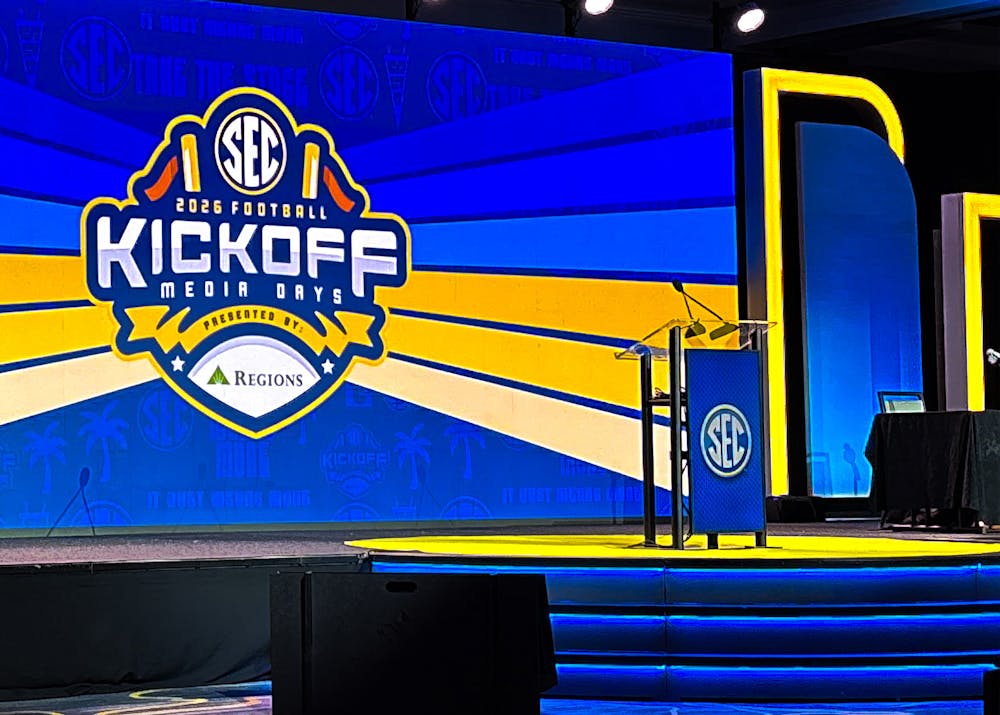
TAMPA, Fla. — SEC Commissioner Greg Sankey took the stage Monday morning to kick off the 2026 media days for the Southeastern Conference, discussing key topics for the conference
Sankey began his remarks by acknowledging the success of the conference’s student-athletes, universities, and coaches over the past athletic season.
“Our institutions had to navigate a historic level of change while continuing to provide outstanding educational and competitive opportunities for student-athletes, and that means that on the field we experienced a conference record 13 team national championships. Our previous high was 10,” commissioner Sankey said. “We have 22 sports in which we sponsor championships, and over half of those right now are national champions.”
Commissioner Sankey further hyped the SEC's pedigree a couple of minutes later, discussing the attention it has garnered on TV and for in-person crowds.
“Southeastern Conference football remains the second most-watched sports property in the United States, trailing only the National Football League, and we account for just over 40 percent of the live viewership hours consumed among the four major conferences. Our football programs draw an average of 80,000 fans per game; that's our average number … That's the highest average attendance for any sport league in the world.”
Besides football, Sankey said the SEC was a national leader in attendance in just about every other SEC-sponsored sport, showing the fans’ passion across the league and expounding the belief that “it just means more in the SEC”.
Then Sankey addressed what has been the main talking point in college athletics for the last couple of years: the house settlement and structure coaches have been trying to find amid the new age of NIL.
“For more than six years, those of us in the conference office, the leaders on our university campuses, southeastern conference student athletes, and policymakers have worked in good faith, seeking the return of national standards through federal legislation, these efforts have demonstrated not only how complex these issues have become, but also have reinforced my belief that congressional action remains a needed path to ride that long-term stability," Sankey said.
“At its core, it sounds like a straightforward objective, one national standard, a national framework with rules that can be consistently enforced. Because student athletes, coaches, and universities deserve to compete under consistent standards, regard. standards, regardless of geography."
Sankey was asked whether, if that structure were not added in the future, there was any real chance of the SEC forming its own league.
“So they're real … I think that's just honest communication. I would prefer that stay in a meeting room or on a video conference and not be part of the D1 ticker the next morning, but I don't control all of that. What I think is important is those comments represent a high level of frustration with the circumstance in which we find ourselves, we have regulated ourselves more aggressively than other colleagues by choice across our league. We've had different academic eligibility restrictions in the past, so we've had different transfer restrictions in the past, so some of what you hear comes out of a culture that we can regulate ourselves … And so, understand that beneath the observation is frustration," continued Sankey.
Sankey’s main stress of the process is that the SEC just wants to know that they are being held to the same standard as other conferences. Whether that be in recruiting, transfers, NIL, or even the college football playoff, Sankey feels athletes want to feel like they're being regulated the same as the people lining up on the same field.
In the last portion of the opening segment, Sankey was asked about playoff expansion and how it might affect the conference championship game.
“I think that even the move to 12 has created pressure around the championship game, and we've talked through the factors that support prolix, and we've talked about some of the economists, if you will, the negative state, and we have some time. We will have a conference championship game the first Saturday in December of 2026.” Sankey said. “We have contracts and plans in place well beyond that. We have time for consideration, and one of the factors for us is what will happen with that conference result,” Sankey added.
As the coaches come before the media this week, Sankey will look to set the conference's future as soon as he can, whether that is through federal legislation or by breaking away as a whole.